Unlocking the Potential of a Walking Logbook for Your Fitness Journey
Staying active and tracking your fitness progress has never been more accessible, thanks to the innovative Walking Logbook. This comprehensive tool is designed specifically for those who love walking and want to keep a detailed record of their activities. Whether you're a casual walker or an avid hiker, this logbook offers a structured way to monitor and enhance your walking experience.
What Makes the Walking Logbook Stand Out?
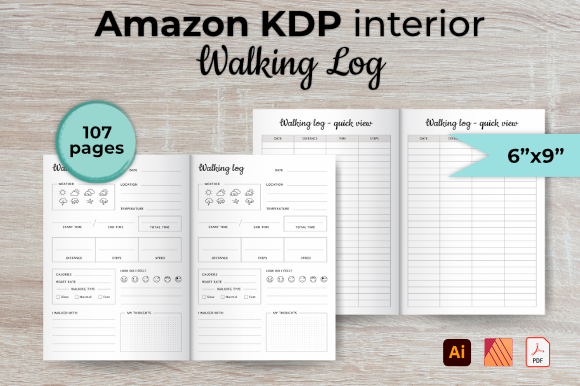
The Walking Logbook is not just any journal; it's a meticulously crafted 6" x 9" inch book that comes with a high-quality PDF file (300dpi) ready for upload and print. The package also includes editable files in Adobe Illustrator and Affinity Publisher, making it incredibly versatile for customization. Here’s what you get:
- A dedicated contact page for important information.
- 100 detailed walking log pages, each with sections for date, weather, location, duration, distance, steps, speed, calories, heart rate, walking type, mood, notes, and companions.
- Four quick view tables, each with 25 rows, for at-a-glance summaries.
- A total of 107 pages, all formatted to fit the 6x9 inches dimensions perfectly.
Why Keep a Walking Log?
Maintaining a walking log can significantly enhance your fitness journey. It helps you stay consistent, set realistic goals, and track your progress over time. By recording each walk, you can identify patterns, see improvements, and even pinpoint areas where you might need to make adjustments. For instance, if you notice that your heart rate is consistently high on certain days, you might consider adjusting your pace or route.
Detailed Tracking for Optimal Performance
One of the key features of the Walking Logbook is its comprehensive tracking capabilities. Each log page is designed to capture every detail of your walk, from the weather conditions to the number of steps taken. This level of detail is invaluable for anyone looking to optimize their walking routine. Here’s how it works:
- Date and Weather: Record the date and weather conditions to understand how external factors affect your performance.
- Location and Duration: Note where you walked and for how long. This helps in planning future routes and understanding the impact of different terrains.
- Distance and Steps: Track the distance covered and the number of steps taken. This is crucial for setting and achieving step goals.
- Speed, Calories, and Heart Rate: Monitor your speed, the number of calories burned, and your heart rate. These metrics are essential for assessing your fitness level and overall health.
- Walking Type, Mood, and Notes: Describe the type of walk (e.g., leisurely, brisk), your mood, and any additional notes. This can provide insights into how walking affects your mental and emotional well-being.
- Companions: Write down who joined you on your walk. This can be a great way to keep track of social interactions and shared experiences.
Quick View Tables for Easy Reference
In addition to the detailed log pages, the Walking Logbook includes four quick view tables, each with 25 rows. These tables offer a snapshot of your walking history, making it easy to review your progress at a glance. You can use these tables to quickly compare different walks, spot trends, and make informed decisions about your future walking plans.
Customization and Flexibility
The Walking Logbook is not just a static document; it’s a flexible tool that can be customized to meet your specific needs. The included Adobe Illustrator and Affinity Publisher files allow you to make changes, add personal touches, and even create additional pages if needed. This level of customization ensures that the logbook fits seamlessly into your lifestyle and preferences.
Integrating the Walking Logbook into Your Routine
Incorporating the Walking Logbook into your daily or weekly routine is straightforward. Here are some tips to help you get started:
- Set a Regular Time to Log: Choose a consistent time to fill out your log, such as right after your walk or before bed. This helps ensure that you don’t forget to record your activity.
- Use It as a Motivational Tool: Review your log regularly to see how far you’ve come. Use this as motivation to push yourself further and achieve new milestones.
- Share Your Progress: Consider sharing your log with friends or family members. This can be a great way to stay accountable and inspire others to join you on your walking journey.
Conclusion
The Walking Logbook is a powerful tool for anyone looking to enhance their walking experience. With its detailed tracking, quick view tables, and customizable features, it provides a comprehensive and user-friendly way to monitor and improve your fitness. Whether you’re a seasoned walker or just starting out, this logbook is an excellent addition to your fitness toolkit. Start logging your walks today and take the first step towards a healthier, more active lifestyle.